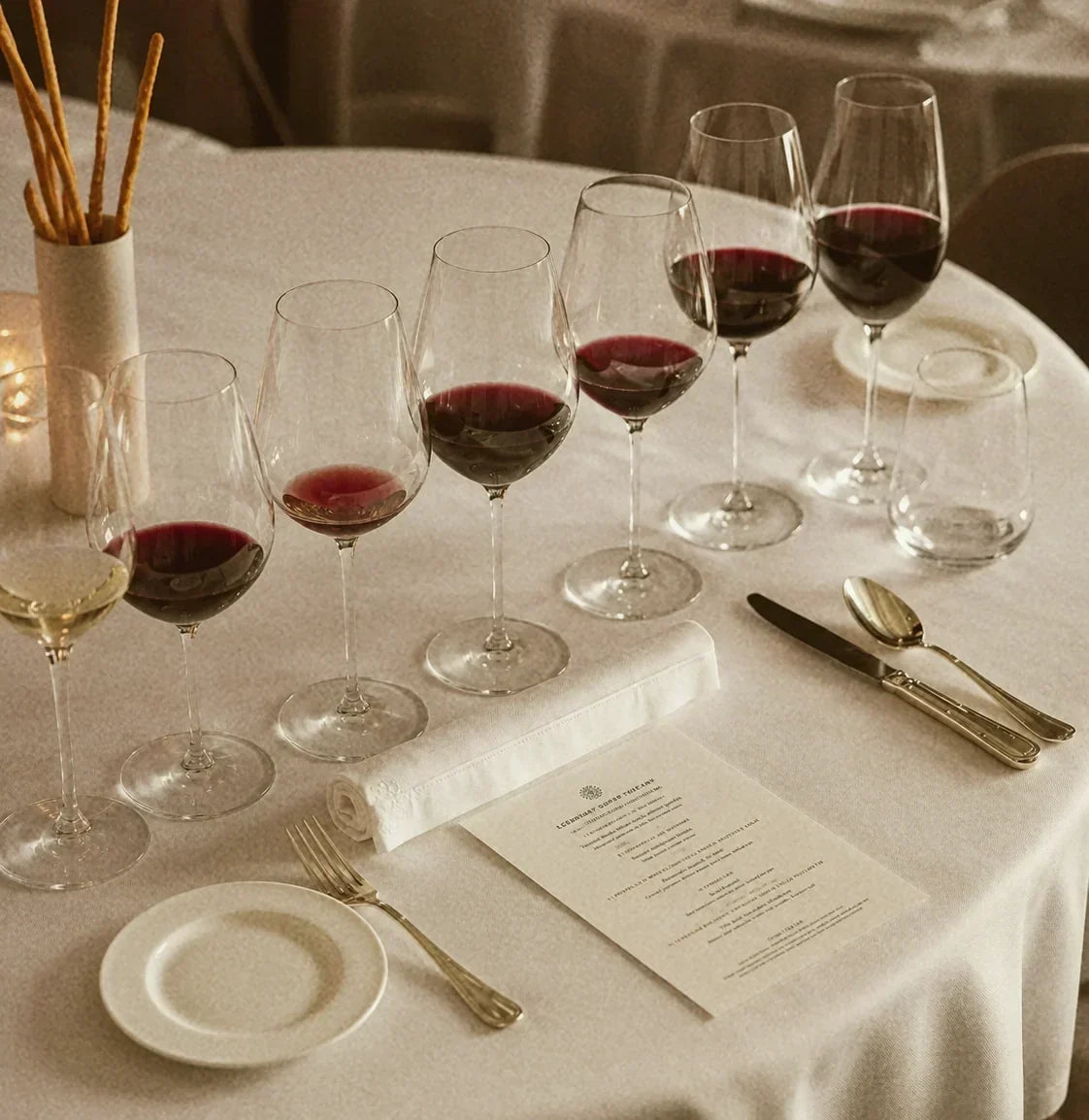
Wine etiquette: traditional vs modern
by Patrick Mur • 7 min read
Wine has collected more etiquette than almost anything else we drink — a thicket of rules that can make a simple glass feel like a test you didn't study for. Most of it isn't worth the anxiety. Strip it back and wine etiquette is really two things: a handful of customs with a genuine reason behind them, and a lot of inherited performance that was never really about the wine. Knowing which is which is the whole point — because good etiquette isn't about being correct. It's about making everyone at the table, the wine included, comfortable.
The traditions worth keeping
Some customs have survived because they actually do something. When the host tastes the wine first — at home, or when a bottle arrives at a restaurant table — it isn't a status ritual; it's a quiet check that the wine is sound before anyone else is poured. Holding a glass by the stem keeps your warm hand off the bowl and the wine at the temperature you meant to serve it. Serving others before yourself is simply good manners in slow motion. None of these are fussy — they're consideration, made into habit.
In practice: Keep the ones with a reason: taste the wine first to check it's sound, hold the glass by the stem, and serve your guests before yourself.
The theatre worth dropping
Then there's the performance. Sniffing the cork tells you almost nothing — a wine is judged by smelling and tasting the wine, not the cork, which the waiter hands you out of habit more than use. Swirling and sniffing with great ceremony impresses no one who actually knows wine. And the belief that older or pricier automatically means better is simply wrong. Most of the intimidation around wine is theatre that grew up around it — none of it required to enjoy a good bottle.
In practice: Skip the cork-sniffing and the performance. Smell and taste the wine itself — that's the only check that tells you anything.
The restaurant ritual, demystified
The moment a server pours a small taste and waits is the one that trips people up. Here's all it means: you're checking the wine isn't faulty — corked, oxidised, obviously off — not deciding whether you like it. You can send back a flawed bottle; you can't send back a sound one just because it isn't to your taste. Taste, and if it's clean, a small nod is all that's needed.
In practice: At a restaurant, the taste is a fault check, not a preference test. If the wine's sound, nod and let them pour. Only reject a wine that's genuinely faulty.
As a guest, as a host
The kindest etiquette is the least rigid. Bring a bottle to dinner as a gift, and don't expect it opened that night — it's a present, not a contribution to the evening's list. Decline a top-up with a light hand over the glass rather than a speech. Don't overfill; a third of the glass is plenty (more on that in pouring vs serving). And a host's only real job is to make guests feel looked-after, not tested. Warmth beats correctness every time.
In practice: Treat a gifted bottle as a gift, decline with a hand over the glass, and never make a guest feel they're getting it wrong.
The only rule that really matters
Underneath all of it is a single, unfussy idea: that the wine reaches everyone at its best. That's less about which hand you hold the glass in and more about the things that actually change what's in it — chief among them, temperature. A wine served and kept at the right temperature does more for a table than any point of etiquette ever will. The complete guide to wine serving temperature has the window for every style.
In practice: Worry less about the rules and more about the wine: serve it at the right temperature, and keep it there. That's the etiquette everyone actually notices.
The last step is yours
Etiquette, done well, disappears — no one notices the rules, only that the evening felt easy and the wine tasted like itself. Keep the customs that have a reason, drop the ones that don't, and serve every glass at the temperature it was made for. That's the step VinoQ protects: the SoloVino and DuoVino hold a bottle where it should be, from the first pour to the last.
Part of our complete guide: How to serve wine, as it was meant to be — read the full guide.
VinoQ. Taste it as it was meant to be.