How to serve Champagne
by Patrick Mur • 6 min read
Champagne is the wine we most often get wrong — precisely because we treat it as celebration first and wine second. It arrives frozen, gets shaken and opened with a bang, and goes into a glass chosen for the photo. Given the same care as any other fine wine — arguably a little more — it's one of the most rewarding things you can pour. Here's how to serve it so the wine, and not just the moment, gets to shine.
Cold, but not too cold
The most common mistake is serving Champagne too cold. Straight from the freezer, or buried in ice, it goes numb — the chill locks away the very aromas and complexity you paid for. Well-chilled is the goal, not frozen: around 6–9°C for most, and the warmer end (8–10°C) for a vintage or a serious cuvée, where an extra degree or two lets it open up. Skip the freezer, too — it chills unevenly and, forgotten, ends in a mess. A bucket of ice and water, half and half, chills a bottle evenly in about twenty minutes.
In practice: Chill in an ice-and-water bucket (not the freezer) to 6–9°C; give a good vintage the warmer end. Well-chilled, never frozen.
Open it with a sigh, not a bang
The loud pop and the spray look festive, but they waste both wine and pressure — and a cork leaving at speed is genuinely dangerous. The elegant way is also the safest: remove the foil, keep a thumb over the cork as you loosen the cage, then hold the cork still and gently twist the bottle. Ease the cork out until it releases with a soft sigh rather than a bang. You keep more of the bubbles, and no one loses an eye.
In practice: Thumb on the cork, twist the bottle (not the cork), and ease it out to a quiet hiss. Point it away from everyone, at a slight angle.
The glass changes everything
A tall flute looks the part and keeps the bubbles lively, but its narrow shape cramps the aroma — fine for a toast, less so for a Champagne worth tasting. A tulip glass, or even a regular white-wine glass, gives a good sparkling wine room to show what it has while still holding its bubbles. The one to avoid is the wide, shallow coupe: elegant, but the bubbles vanish in minutes.
In practice: For a toast, a flute is fine. For a Champagne you actually want to taste, use a tulip or a white-wine glass. Skip the coupe.
The pour
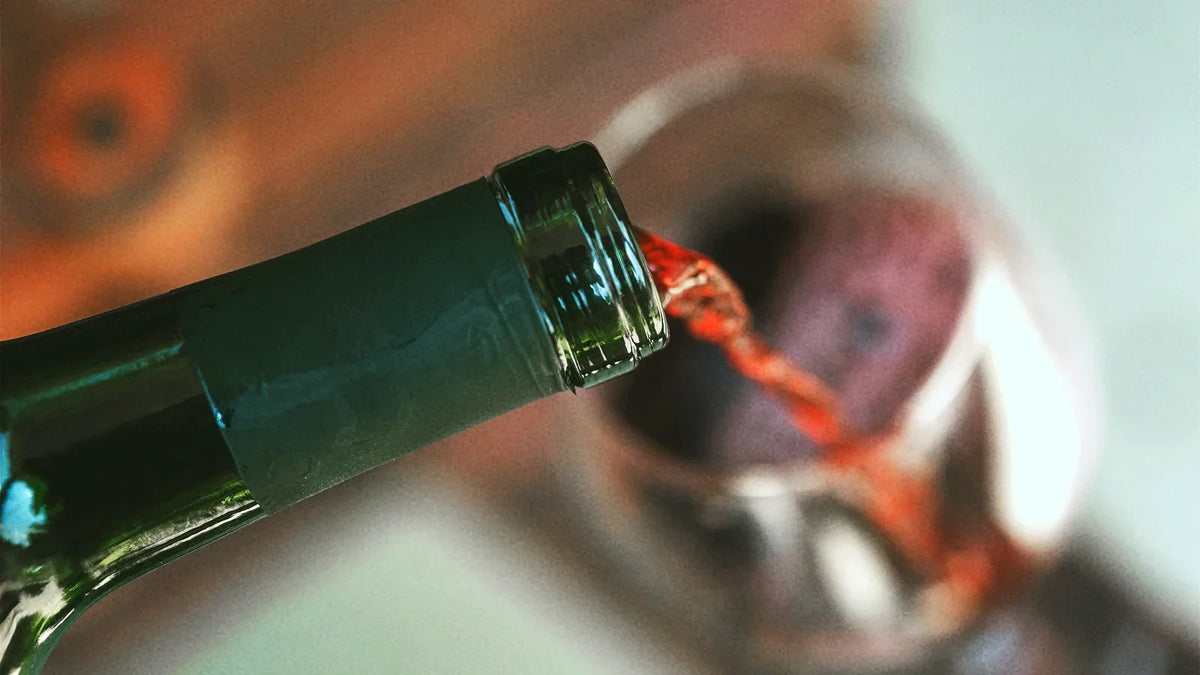
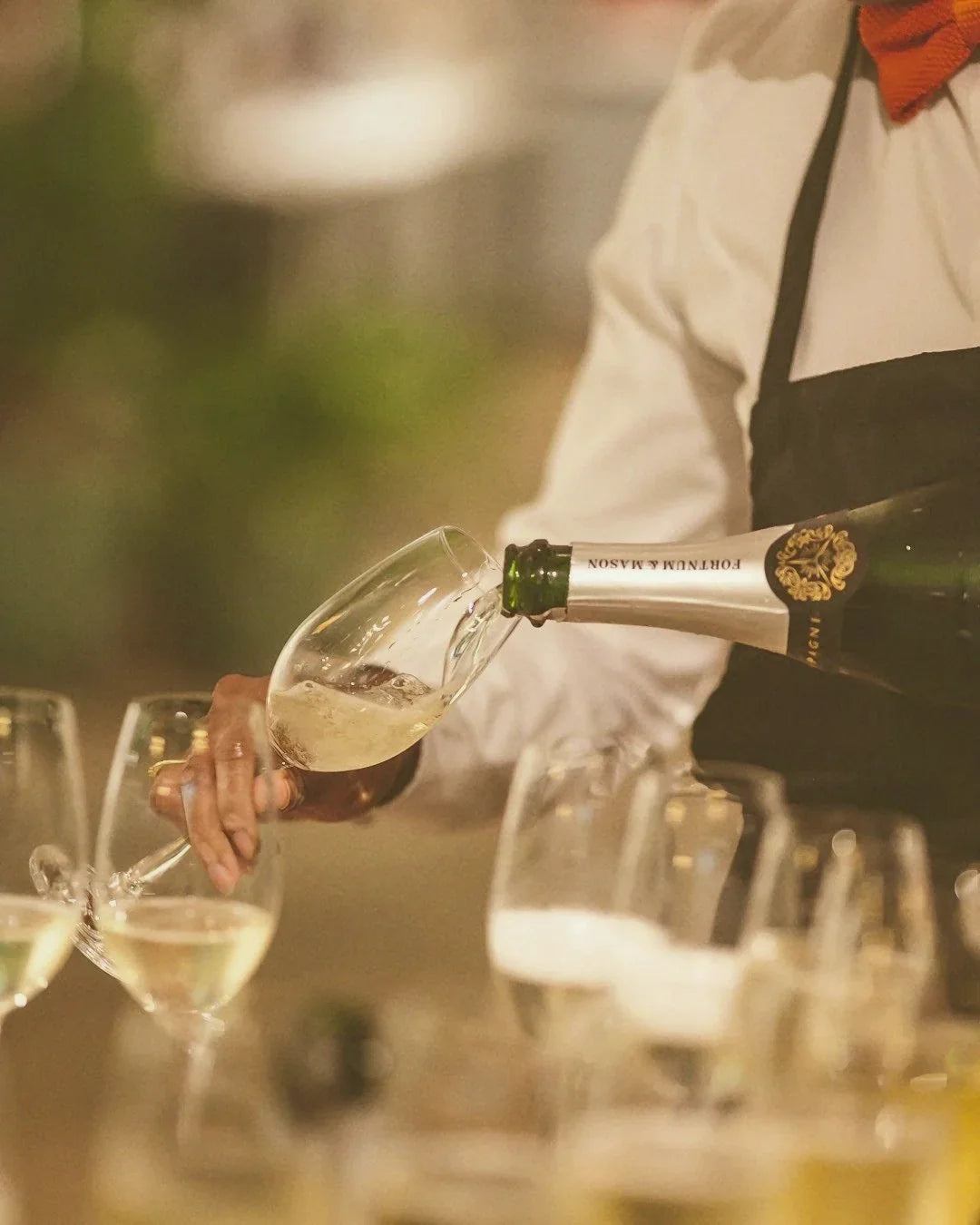
Champagne foams as it hits the glass, so pour against the side, not into the middle, and in two goes — a little, let the mousse settle, then top up. It fills the glass without overflowing, and keeps more of the sparkle in the wine, where it belongs.
In practice: Pour down the side of the glass, in two pours, letting the foam settle between them.
Keeping it right to the last glass
Here's what most celebrations forget: Champagne warms quickly once it's out, and a warm glass of it goes flat and flabby fast. If the bottle sits on the table between pours, by the third round you're drinking something duller than you opened. Keep it cold — on ice, or in a cooler — so the last glass has the same life as the first. The complete guide to wine serving temperature covers the window; holding it is the rest.
In practice: Keep the bottle chilled between pours, not standing on a warm table — so the last glass is as lively as the first.
The last step is yours
Champagne rewards attention like any wine, and then some: the right chill, a quiet opening, a glass that lets it breathe, and — above all — a temperature that holds through the evening. That's the step VinoQ protects. The SoloVino and DuoVino keep a bottle at its proper temperature from the first pour to the last, with a dry system that leaves the label crisp and the table dry — so the celebration stays as good as the toast.
Part of our complete guide: How to serve wine, as it was meant to be — read the full guide.
VinoQ. Taste it as it was meant to be.