How long should wine breathe?
by Patrick Mur • 8 min read
Short answer: less time than the bottle on your counter suggests, and more than a quick pour allows. “Breathing” is one of wine's most repeated rituals — and one of the most misunderstood. Here's what it actually does, which wines need it, and how long to give them.
What “breathing” actually does
Letting a wine breathe means giving it air. Oxygen does two useful things: it softens firm tannins, and it lifts aromas that were closed, or slightly reductive, straight from the bottle. A young, structured red that smells tight and tastes gripping on opening can turn rounder and more expressive after some air. That's breathing doing its job — but it depends entirely on how you give the wine that air.
The myth: that pulling the cork lets it breathe
The classic move is to open a bottle and “let it breathe” on the counter for an hour. It barely works. The only wine touching air is the thin ring at the neck — a surface about the size of a coin. An hour like that changes almost nothing. Real aeration comes from surface area:
The glass does most of the work. Pour, swirl, and you expose the wine to far more air than an open bottle ever will — you can smell it opening within minutes.
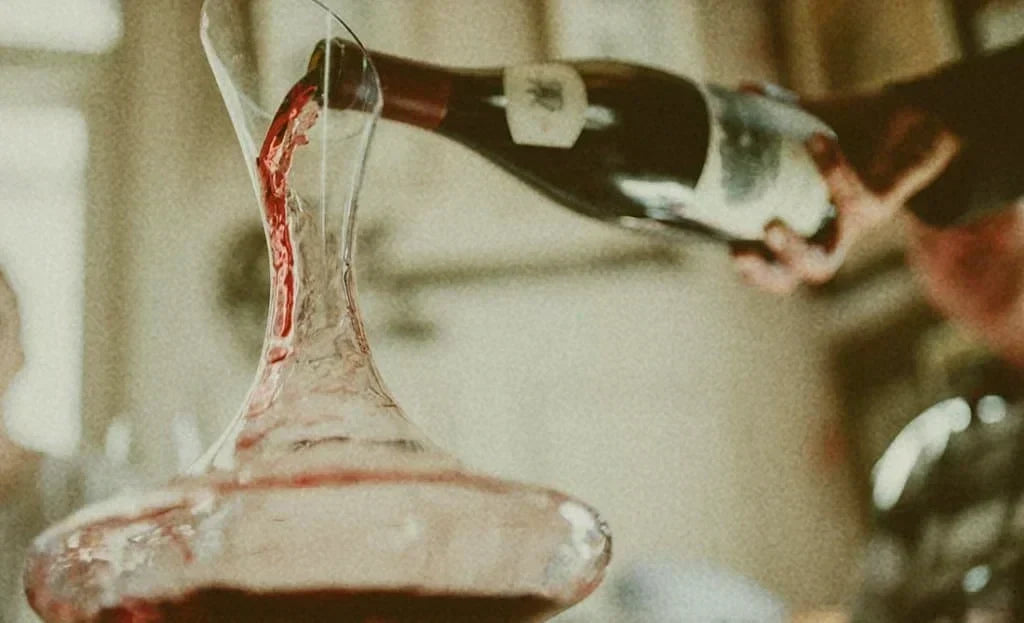
A decanter does it faster and at scale, pouring the whole bottle across a wide surface. Decanting: when it matters covers when that's worth it.
Which wines want air — and which don't
- Young, tannic reds benefit most — Cabernet, Syrah, Barolo, young Bordeaux. Air softens the grip and opens the fruit. Give these the most time.
- Older, delicate reds need care. They can be glorious on opening and fade within the hour, so aerate briefly, taste often, and decant only to leave the sediment behind.
- Most whites, rosés and sparkling need little to none. A few minutes in the glass is plenty; over-aerating trades away freshness — and, for sparkling, bubbles.
So — how long?
There's no single number, because it depends on the wine and how you're aerating. As a rough guide:
- A quick swirl in the glass opens most wines in a few minutes — often all you need.
- A young, tannic red in a decanter: 30 minutes to a couple of hours.
- An older wine: minutes, not hours — watch it closely.
Tip: No decanter, no time? Pour, swirl, wait five minutes. A glass aerates a wine faster than an open bottle ever will.
Breathing and temperature work together
Here's the part usually missed: air and temperature open a wine together. A wine served too cold stays shut no matter how long it breathes — the aromatics simply won't lift. It's why the simple habit of giving a bottle its twenty minutes before serving works so well: in that window a wine both comes to the right temperature and begins to open. Get the temperature wrong, though, and all the breathing in the world won't save it. The complete guide to wine serving temperature has the right window for every style.
The last step is yours
Breathing, like everything about serving, is about removing whatever stands between the wine and the glass — then letting the wine do the rest. Give it a little air, hold it at the right temperature, and a good bottle shows everything it has. That's the step VinoQ protects: the SoloVino and DuoVino hold a wine at its proper temperature while it opens, so what reaches your glass is the wine as it was meant to be.
Part of our complete guide: How to serve wine, as it was meant to be — read the full guide.
VinoQ. Taste it as it was meant to be.